Zodiac Signs vs Constellations: Why Your Sign Didn't Change (the NASA/Ophiuchus Story, Answered Honestly)
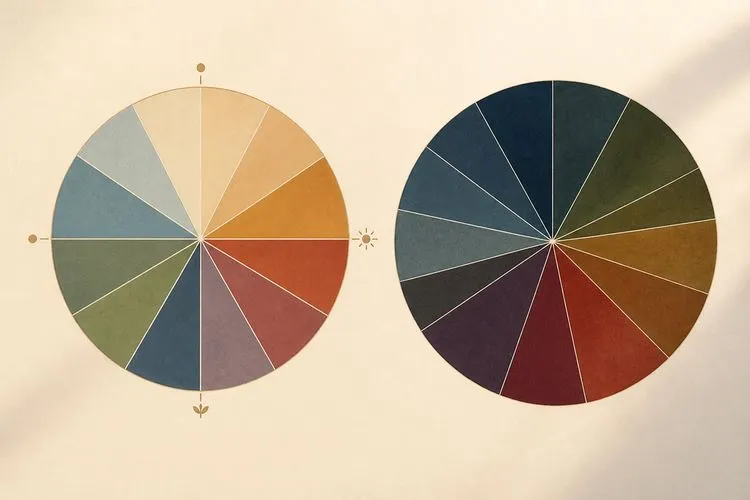
No. NASA never changed the zodiac, and your sign did not move. If a viral list just told you that you are not who you thought you were, take a breath: the astronomy in that post is real, but its conclusion is wrong.
The confusion comes from treating two systems with shared names as though they were one system.
I will separate them, explain one slow wobble, quote NASA's dated response, and put Ophiuchus where it belongs.
This is one piece of the site's broader zodiac basics, written for anyone who wants the facts without being mocked for caring.
What the Viral Story Gets Right: 13 Constellations, Unequal Sizes
Start with the part the meme gets right. Under the International Astronomical Union's map, the Sun passes through 13 constellations along the ecliptic: the twelve that share names with zodiac signs, plus Ophiuchus.
Those constellation regions are wildly unequal. NASA's figures, reported by CNN in 2020, give the Sun about 7 days in Scorpius and 45 days in Virgo. J.B.
Tatum's 2010 figures give roughly 6-7 days in Scorpius, 44-45 in Virgo, and about 37-39 in Taurus. One magazine has printed 5 days for Scorpius, while Britannica gives a Nov. 23-30 window.
A variance of 1-2 days is not evidence that somebody cannot count. The boundary-crossing time changes with the year and the calculation method, and sources may round dates differently. That is why I use approximate ranges and identify the source or epoch instead of presenting one viral chart as timeless.
Ophiuchus is part of this real astronomy. In a worked modern ephemeris summarized by Guy Ottewell, the Sun is behind its IAU region from about Nov. 29 to Dec.
18, or roughly 18-19 days. All of that has been known to astronomy for a long time. None of it changes a tropical sign, because a sign and a constellation are not the same kind of thing.
Signs vs Constellations: Two Different Systems, Same Names
A tropical sign is one of twelve exactly equal 30-degree sectors counted from the March equinox. It is a season-anchored coordinate scheme. A constellation is an irregular region on an official sky map, with boundaries formalized by the International Astronomical Union.
The names overlap because both systems inherited language from antiquity. The objects named by those words do not have the same boundaries.
The tropical structure is 12 × 30 degrees, making the full 360-degree ecliptic.
It appears to have been standardized near the end of the fifth century BC, with calculations pointing to 409-398 BC, probably within a few years of 401 BC, by analogy with twelve schematic 30-day months.
The earliest surviving Greek use is in the Anaphoricus of Hypsicles of Alexandria, around 190 BC. I explain the tropical zodiac system in plain English elsewhere, along with the twelve signs and their four elements.
Side by Side: Sign Dates vs Where the Sun Actually Is
| Name | Tropical sign, indicative dates | Sun behind the IAU constellation, approximate modern window | Days behind the constellation |
|---|---|---|---|
| Aries | Mar. 21-Apr. 19 | About Apr. 19-May 14 | About 25 |
| Taurus | Apr. 20-May 20 | Modern transit varies by epoch | About 37-39 |
| Virgo | Aug. 23-Sept. 22 | Modern transit varies by epoch | About 44-45 |
| Scorpio / Scorpius | Oct. 23-Nov. 21 | About Nov. 19-29 | About 6-8 |
| Ophiuchus | Not a sign in either living zodiac system | About Nov. 29-Dec. 18 | About 18-19 |
Windows are approximate for modern epochs. Britannica, NASA, Tatum, and worked ephemerides differ by 1-2 days because of epoch, calculation method, and rounding. Data reviewed as of 2026. These are constellation transits, not alternate sign dates.
I once opened a sky app around my birthday and saw the Sun labeled inside a constellation different from my sign. For a moment, the floor tilted exactly as the meme intends. The distinction between a seasonal sector and a mapped star region dissolved the apparent contradiction.
A name shared by two different things is the whole hoax in miniature. You can also use the two-wheel demonstration below to see it move.
Precession: The 26,000-Year Wobble in Five Numbers
Earth's axis slowly wobbles like a top losing speed. That motion is called axial precession, and five numbers make its scale easier to grasp:
- The equinox point moves westward along the ecliptic by about 50.3 arcseconds per year.
- That is about 1 degree every 71.6 years, usually rounded to 72 years in plain-language explanations.
- A modern value for the full cycle is 25,772 years, commonly written as about 26,000 years. Reputable roundings range from 25,765 to 25,800 years; older esoteric literature often uses about 25,920 years and calls it the "Platonic Year."
- A 30-degree shift, equal to one tropical sign sector, takes about 2,150 years.
- The tropical year is 365 days, 5 hours, 48 minutes, 45 seconds. The sidereal year is 365 days, 6 hours, 9 minutes, 10 seconds, a difference of about 20 minutes and 24.5 seconds.
That last difference is the physical reason the seasonal calendar and the stellar backdrop cannot both remain aligned. The tropical zodiac follows the seasonal point. The constellations do not.
This was no modern surprise. In the second century BC, around 127-130 BC, Hipparchus compared the longitude of Spica with records made by Timocharis, who lived around 320-260 BC, and Aristillus, around 280 BC. He found a 2-degree displacement and concluded that the rate was at least 1 degree per century.
Newton established the physical cause in 1687. Humanity has known about the effect for more than 2,100 years.
The pole stars make the wobble visible across long spans of time.
One illustrative chronology places Thuban near the pole around 2830 BCE, Polaris closest at roughly 0.45 degrees around 2100 CE, Errai taking its turn around 4200 CE, Alderamin around 7500 CE, and Vega somewhere around 12,000-13,727 CE.
Those dates are approximate, but the succession shows that "north" does not point toward one star forever.
The March equinox point still carries its ancient name, the "first point of Aries," even though it entered constellation Pisces around year 1. It is presently in Pisces and moving toward the Pisces-Aquarius border. The old name belongs to the coordinate system, not the current constellation under the point.
The Drift, Demonstrated: Constellation Aries from 500 BC to Today
Here is one worked example from Guy Ottewell's historical ingress table. The dates show when the Sun entered the mapped constellation Aries, compared with sign Aries beginning on or about March 20.
| Era | Sun enters constellation Aries | Annotation |
|---|---|---|
| 500 BC | Mar. 20 | The constellation and seasonal sign are approximately aligned. |
| AD 1 | Mar. 24 | The stellar entry has slipped about 4 calendar days later. |
| AD 500 | Mar. 27 | The widening offset is now about a week. |
| AD 1000 | Mar. 30 | The constellation entry is about 10 days after the sign begins. |
| AD 1500 | Apr. 2 | The star region has moved farther into the sign's calendar span. |
| AD 2000 | Apr. 18 | The offset is close to a full 30-degree sign sector. |
At about 1 degree per 72 years, two and a half millennia slid the stars roughly one whole sign while the sign stayed anchored to the seasonal calendar.
The 1930 Map: What the IAU Actually Did
Constellations are map regions, not merely connect-the-dots pictures. The International Astronomical Union was founded in 1919 and adopted 88 constellations with official Latin names and three-letter abbreviations in 1922.
Eugène Delporte proposed a boundary scheme in 1925. The IAU approved it at its 1928 General Assembly in Leiden, then published it in 1930 as Délimitation Scientifique des Constellations. Delporte used B1875.0 coordinates and built on Benjamin Gould's 1879 boundaries for southern constellations.
The finished map leaves no gaps, and no star belongs to two constellation regions. That clean bookkeeping has a curious consequence: the viral "dates" are products of mapped boundaries. The Sun spends about a week behind Scorpius and roughly six weeks behind Virgo because those regions have unequal widths, not because a zodiac sign was shortened.
The IAU defined constellations for astronomical bookkeeping. It has never had authority over astrological signs.
Ophiuchus: Real Constellation, 1970s Sign Proposal, Never Adopted
Ophiuchus has a dignified identity of its own. Its name means the Serpent Bearer, and the figure represents Asclepius, the Greek god of medicine. The Rod of Asclepius remains a symbol of medicine, and Ptolemy included Ophiuchus among his 48 constellations.
Under modern IAU boundaries, the Sun crosses Ophiuchus for about 18-19 days, approximately Nov. 29-Dec. 18 in a modern worked ephemeris.
That transit occupies most of tropical Sagittarius season. It still does not make Ophiuchus a sign in either living zodiac system: both tropical and sidereal zodiacs retain twelve signs.
The proposal to use it as a sign did not come from NASA. In 1970, Steven Schmidt proposed a 14-sign zodiac that assigned Ophiuchus to Dec. 6-31 and Cetus to May 12-June 6.
His 1974 version proposed Pluto as Ophiuchus's ruler. Walter Berg and Mark Yazaki proposed a 13-sign version in 1995, which gained some popularity in Japan.
Lists placing the Sun in Ophiuchus have circulated since at least the 1970s. They describe a proposed alternative or an astronomical transit, not a revision accepted by tropical or sidereal astrology.
The NASA Episode, Dated: 2011, 2016, 2020
Three media waves are commonly blended into one story. Keeping the dates separate shows that NASA explained astronomy rather than issuing an astrological decision.
| Year | What triggered the wave | What NASA actually said |
|---|---|---|
| 2011 | Minnesota Planetarium Society coverage, including a Minneapolis Star Tribune piece recycling a 2007 LiveScience article | Nothing. NASA made no statement in this wave. |
| 2016 | A Cosmopolitan article interpreted a NASA Space Place children's page as a revised zodiac | NASA's September 2016 Tumblr post said, "we study astronomy, not astrology. We didn't change any zodiac signs." Spokesperson Laurie Cantillo said, "we just did the math." |
| 2020 | NASA's July 17 tweet re-shared its 2016 explanation | The tweet pointed readers back to the same explanation; it did not announce a new system. |
The dates floated in the 2016 coverage would have placed Ophiuchus from Nov. 29 to Dec. 17.
Those dates came from treating constellation transits as sign dates, not from an agency publishing a usable zodiac calendar.
NASA's own historical explanation says the Babylonians drew up the zodiac about 3,000 years ago. They knew the ecliptic crossed 13 constellations but left out Ophiuchus to make a tidy match with a 12-month calendar. That is NASA explaining why an ancient schematic system has twelve parts.
The agency's 2016 wording deserves to stay intact: "we study astronomy, not astrology. We didn't change any zodiac signs." Laurie Cantillo's shorter description was equally plain: "we just did the math."
Myth vs Fact: The Viral Claims, Checked
These are the four claims I see carrying most of the confusion. Each begins with a real detail, then jumps to a conclusion the sources do not support.
Myth: "NASA changed the zodiac or added a 13th sign."
Fact: NASA wrote in September 2016, "we study astronomy, not astrology. We didn't change any zodiac signs." The episode was a recurring media wave about an astronomy explainer, not an agency decision about astrology.Myth: "The dates shifted, so my sign changed."
Fact: Tropical sign dates remain tied to the seasonal equinox point. Precession shifted the star backdrop by about 24 degrees as of the 2020s; viral date lists describe constellation transits in that different frame.Myth: "Born Nov. 29-Dec. 18? You are an Ophiuchus."
Fact: The Sun spends about 18-19 days behind the real constellation Ophiuchus in a modern epoch. Ophiuchus is not a sign in either living zodiac system, and the 1970 and 1995 proposals were never adopted.Myth: "The ancients did not know about Ophiuchus or the wobble."
Fact: NASA says the Babylonians counted 13 ecliptic constellations about 3,000 years ago and chose twelve for their scheme. Hipparchus identified precession in the second century BC, so the wobble is not a recently uncovered mistake.
Tropical vs Sidereal: The Honest One-Block Comparison
The tropical and sidereal zodiacs use the same twelve names but choose different anchors. Tropical astrology counts from the March equinox and keeps its relationship to the seasons. Sidereal traditions anchor the zodiac to fixed stars.
The separation between those anchors is called the ayanamsa. It is about 24 degrees as of the 2020s, nearly one full sign, and grows by roughly 1 degree every 72 years. That is why a Vedic sun-sign label is usually one sign earlier than a tropical one.
| Comparison | Tropical zodiac | Sidereal zodiac |
|---|---|---|
| Anchor | March equinox point | Fixed stars |
| What stays fixed | Seasonal calendar relationship | Relationship to star positions |
| What drifts | Star backdrop behind the signs | Calendar alignment |
| Gap between them | About 24 degrees as of the 2020s | The same shared separation, growing about 1 degree per 72 years |
| Who uses it | Western sun-sign astrology | Vedic and other sidereal traditions |
Asking for a "real" sign does not resolve the issue because "real" does not name an anchor. There are two systems, and the answer depends on which one you mean. I describe both here and rank neither.
The Age of Aquarius: Why Nobody Can Date It
The equinox point remains in constellation Pisces and moves toward the Pisces-Aquarius border. At about 2,150 years per 30 degrees, astrological "ages" express a real unit of precessional drift.
A precise start date for the Age of Aquarius does not follow from that fact.
Constellation boundaries, symbolic conventions, and astrological traditions do not supply one universally accepted starting line, so every date attached to the phrase belongs to contested tradition rather than settled astronomy.
That distinction suits my own boundary with the subject. I don't read daily horoscopes - I like the zodiac as a mirror, not a map.
Frequently Asked Questions
When did the "new zodiac dates" story start?
The documented modern waves appeared in 2011, 2016, and 2020. Minnesota Planetarium Society coverage drove the 2011 version; a Cosmopolitan reading of a NASA children's page triggered 2016; NASA's 2020 re-share revived it. The underlying alternative-zodiac proposals date to the 1970s.
If the constellations shifted, is my sign wrong?
No. A tropical sign is defined from the seasonal equinox point, not from the current constellation backdrop. Precession produced an offset of about 24 degrees as of the 2020s, but that describes the relationship between two frames rather than correcting your existing tropical label.
How fast is the precession of the equinoxes?
The rate is about 50.3 arcseconds per year, or 1 degree in roughly 72 years. A modern value for the full cycle is 25,772 years, commonly rounded to about 26,000. The rate varies slightly over long periods, which explains nearby published estimates.
When were the constellation boundaries officially set?
The IAU adopted the 88 constellations and their official names in 1922. Delporte proposed the boundary scheme in 1925; the IAU approved it in 1928 and published it in 1930 using B1875.0 coordinates. Those mapped regions underpin modern constellation-transit dates.
Who discovered the precession of the equinoxes?
Hipparchus identified precession in the second century BC. He compared Spica's position with earlier observations by Timocharis and Aristillus, found a 2-degree displacement, and inferred a slow shift. The wobble has therefore been known for more than 2,100 years.
Should I get my zodiac tattoo removed if the dates changed?
No need. The system your tattoo came from did not change; the viral dates describe constellation regions, which use a different frame. I keep thinking of the BBC-quoted tweet, "So now there's a new 13th star sign and I have the wrong one tattooed on me."
You do not.
Drag the two-wheel widget's year slider once and watch the star wheel slide while the sign wheel stands still. Then, if you want to confirm a birthday with year-aware boundary handling, continue to the tropical zodiac system in plain English and use its date decoder.
Sources
- NASA Tumblr, September 2016, via AFP Fact Check, "Old hoax resurfaces online about NASA adding 13th zodiac sign Ophiuchus". Verbatim NASA statement and Babylonian explanation; rechecked across the 2020-2022 waves.
- CNN, "No, NASA didn't create a 13th zodiac sign", July 17, 2020. NASA's 2020 tweet and the 7-day Scorpius and 45-day Virgo figures.
- BBC Trending, 2016: how the rumor spread that NASA had changed the star signs. The Cosmopolitan trigger, Laurie Cantillo quote, and circulated dates.
- Encyclopaedia Britannica, "Zodiac", reviewed August 2026. Sign and constellation date offsets.
- J.B. Tatum, "The Signs and Constellations of the Zodiac," via Scientific American, June 2010. Unequal transit durations.
- Wikipedia, "Axial precession", reviewed August 2026. Precession rate, cycle, year lengths, and discovery history.
- NASA GSFC Stargaze, "Precession", reviewed August 2026. The first point of Aries and its present location in Pisces.
- Ian Ridpath, "Constellation boundaries", reviewed August 2026. The IAU and Delporte boundary chronology.
- Guy Ottewell, Universal Workshop, "Sun entering signs and constellations", reviewed August 2026. Ophiuchus transit and historical Aries ingress dates.
- Wikipedia, "Ophiuchus (astrology)", reviewed August 2026. The Schmidt, Berg, and Yazaki proposals.
The zodiac described here is a symbolic tradition for entertainment and self-reflection, never a scientific description of any person. Constellation transit windows vary with epoch, calculation method, and rounding; they are not alternate sign dates.